Trusted Tree Care Services in Greenville, SC
Welcome to your one-stop spot for finding awesome tree care folks right here in Greenville, SC! Whether you need a stubborn stump gone or just want your trees looking their best, we've got you covered with local pros who know their stuff.
Map of Businesses in Greenville
All Listings in Greenville
8 businesses
Arbor Care Solutions
Tree service
Greenville Tree Co.
Tree service
Integrity Tree Co.
Tree service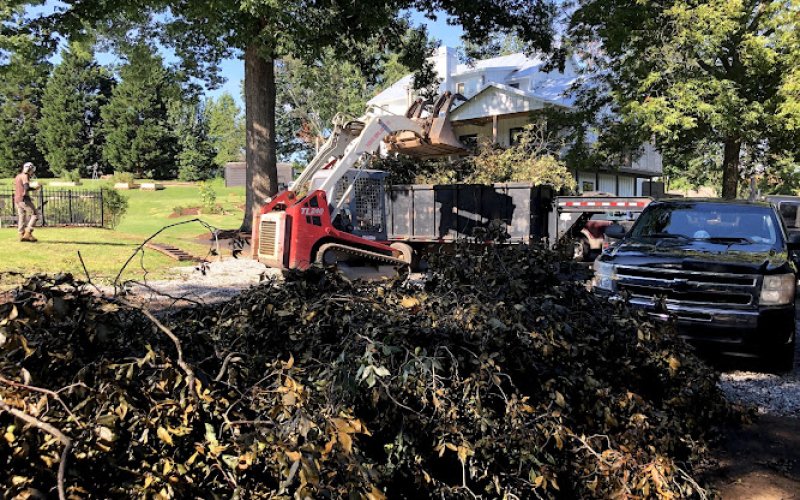
McKenzie Tree Co
Tree service
Premier Tree Care
Tree service
Schneider Tree Care
Tree service
The City Arborist, LLC
Tree service
Terra Tree Works
Tree serviceAbout tree care in Greenville
Drive through the older parts of Greenville after a summer thunderstorm rolls off Paris Mountain, and you'll usually spot at least one crew already working a downed limb before the streets even dry out. That's the rhythm of this business here. Greenville sits in a climate that grows trees fast and big — water oaks, pines, sweetgums, tulip poplars — and then occasionally tries to knock them all down with a line of severe thunderstorms or the tail end of a tropical system. Tree care in this city isn't really a seasonal niche. It's closer to infrastructure.
The market itself feels like a mix of a few established, well-equipped companies with bucket trucks and stump grinders, and a much larger tier of smaller crews and solo operators running a chainsaw and a chipper out of a pickup. Fragmented is the word for it. Some of these smaller outfits are perfectly competent guys who've been climbing trees in this county for a couple decades. Others show up in a storm's aftermath, work a week, and disappear — more on that later. So the range in quality is wide, and that's exactly why a directory like this matters more here than in a city with less canopy and less weather risk.
Demand comes from a few directions at once. You've got homeowners in neighborhoods with mature tree cover dealing with a leaning water oak or storm-split limb. You've got developers clearing lots in the growth corridors out toward Five Forks or up 25 as new subdivisions get carved into former farmland and pine stands. And you've got HOAs maintaining common areas and tree lines, which in a lot of newer Greenville communities means ongoing pruning contracts rather than one-off emergency calls. Compared to a flatter, drier market, Greenville's combination of clay soil, root rot pressure on certain pines, and genuine storm risk keeps this a steadier — and sometimes more urgent — business than people expect.
Alta Vista / North Main
- Area Profile: Established, higher-income neighborhood with older homes and a canopy that's been growing since before the streets were paved. Lots of long-time residents alongside younger families who bought in for the character.
- Tree Care Services Activity: Heavy on pruning and canopy management — homeowners here tend to want their big oaks and hardwoods preserved, not removed, unless there's clear risk. Storm cleanup after big blows is common too.
- Price Range: Mid-to-premium, often $600–$2,500+ depending on tree size and access.
- Local Note: Narrow older streets and mature root systems close to foundations mean equipment access can be tight — bucket trucks sometimes can't get where they need to, which pushes jobs toward climbing crews instead.
Five Forks / Simpsonville Corridor
- Area Profile: Newer growth area, lots of recent subdivisions, families, a mix of income levels but generally solidly middle-to-upper-middle class.
- Tree Care Services Activity: Lot clearing for new construction, plus a growing volume of routine pruning and stump grinding as neighborhoods mature and yards get landscaped.
- Price Range: Wide — lot clearing jobs can run well into the thousands, while routine yard tree trimming stays in the $300–$900 range.
- Local Note: HOA rules here are a real factor. A lot of these communities require approval before removing anything over a certain size, even on your own lot.
Augusta Road / Parkins Mill
- Area Profile: One of Greenville's more affluent, established residential pockets — big lots, big trees, and homeowners who tend to invest in ongoing property upkeep rather than reactive fixes.
- Tree Care Services Activity: Preventative pruning, cabling/bracing on valuable specimen trees, and proactive removal of declining trees before they become a hazard.
- Price Range: Premium end, often $1,000–$3,000+ for larger or more technical jobs.
- Local Note: Homeowners here are more likely to hire a certified arborist for consultation rather than just calling the first name in a search result — reputation matters more than price in this pocket.
West Greenville / Village of West Greenville
- Area Profile: Formerly working-class mill village, now a mix of long-time residents and newer arrivals drawn by the arts district revival. Smaller lots, older housing stock.
- Tree Care Services Activity: Removal of aging, storm-damaged, or disease-stressed trees close to structures; stump grinding is common since yards are small and stumps eat up usable space.
- Price Range: More budget-conscious overall, $250–$1,200 for typical jobs.
- Local Note: Tight lots and close-set houses mean crane work is sometimes unavoidable for a tree that's too close to a neighbor's roofline — which pushes price up even on a modest tree.
Simpsonville & Fountain Inn Outskirts
- Area Profile: More rural-adjacent, larger properties, mix of long-established farms and newer rooftops as growth pushes south.
- Tree Care Services Activity: Larger-scale removal, land clearing, and pasture/property line tree management. Less pruning-for-aesthetics, more practical clearing.
- Price Range: Varies enormously depending on acreage and volume — small jobs $300–$800, clearing projects much higher.
- Local Note: Equipment access is usually easier out here (more open land), which can actually bring costs down compared to tight-lot city jobs.
📊 Current Price Points:
- Budget options: $150–$450 (small tree/limb trimming, basic pruning)
- Mid-range: $500–$1,800 (medium tree removal, most popular segment)
- Premium: $2,000+ (large/hazardous tree removal requiring a crane, extensive stump grinding, multi-tree jobs)
📈 Market Trends:
- Demand runs steady year-round but spikes hard and fast after severe storms — this is the defining rhythm of the Greenville market.
- Crew availability tightens noticeably during and right after storm season; experienced climbing crews and crane operators are the bottleneck, not chainsaws.
- Pricing has been drifting upward gradually, tracking general labor and insurance cost pressure rather than any single dramatic jump.
- Dormant-season (late fall through winter) is the sweet spot for routine pruning — trees are easier to read structurally with no leaves, and crews have more open calendar space.
- Emergency work often gets scheduled within a day or two after a storm (sometimes same-day for genuinely hazardous situations), while routine pruning or removal can mean a one-to-four-week wait during busy stretches.
💰 What People Are Spending:
- Medium tree removal (most common job): $600–$1,800
- Trimming/pruning (routine maintenance): $250–$700
- Stump grinding: $150–$500 depending on diameter and number of stumps
- Emergency storm cleanup: $400–$2,500+, heavily dependent on access and damage extent
Economic Indicators: Greenville's population and housing footprint have been expanding for years now, with growth pushing outward toward Five Forks, Simpsonville, and the areas near GSP airport. Major employers here skew manufacturing and healthcare, with a well-known automotive and advanced manufacturing presence anchoring a good chunk of the regional economy. New residential development keeps generating lot-clearing work, while the older core neighborhoods generate the maintenance and storm-response side of the business. Income levels vary widely by neighborhood, which is part of why the pricing spread across this guide is so wide.
Local Market Dynamics: The tree canopy in Greenville's older neighborhoods is aging into the stage where large hardwoods start dropping limbs or developing root and trunk issues — that alone generates steady work independent of storms. Add in occasional pest and disease pressure on pines and certain hardwood species, and you've got demand that doesn't really disappear even in a quiet weather year. Competition is fragmented — a handful of larger, well-equipped companies compete for the bigger commercial and premium residential jobs, while dozens of smaller crews compete on price for routine residential work.
How This Affects Buyers/Customers: Practically, this means a homeowner in Alta Vista chasing a quote should expect a different price and different crew type than someone in Five Forks calling about the same size tree — access, insurance costs, and local demand all shift the number. It also means shopping around actually pays off here, since the market isn't dominated by one or two pricing standards.
- ☀️ Spring/Summer: High demand, thanks to full canopy growth and Greenville's peak severe storm season — expect longer wait times and higher emergency pricing.
- 🍂 Fall: Good window for proactive hazard removal before winter storms and ice events; crews often have more flexibility than summer.
- ❄️ Winter: Slower season overall — dormant-season pruning is often cheaper, healthier for the tree, and easier to schedule.
- 📅 Peak months: Book early for spring/early summer work; winter is your best negotiating window for routine jobs.
Timing Tips for Greenville: Non-emergency pruning and removal booked in late fall or winter tends to be both cheaper and better for tree health. Emergency demand spikes hardest right after a named storm or a bad line of thunderstorms — expect a premium and a wait if you call during that window. For routine maintenance, scheduling a few weeks to a couple months ahead is realistic; for peak spring season, longer lead times aren't unusual.
Smart Timing Tips:
- ✓ Schedule routine pruning in winter when trees are dormant and crews have open calendars
- ✓ Get a hazard tree assessed in fall, before winter ice and spring storms test its limits
- ✓ Avoid signing anything with a door-knocking crew in the immediate aftermath of a storm — wait a day, get a second opinion
- ✓ Bundle jobs (trim + stump grind, or multiple trees) to negotiate better per-job pricing
Credentials to Verify: Look for a company employing an ISA Certified Arborist, especially for anything involving tree health diagnosis or preservation decisions rather than straightforward removal. Confirm they carry a valid South Carolina contractor's or business license and — critically — both general liability insurance and workers' compensation coverage for climbers. Membership in TCIA (Tree Care Industry Association) is a solid signal of legitimacy, though plenty of good local operators aren't members. Check Google reviews, Nextdoor mentions, and the Better Business Bureau for complaint patterns.
Questions to Ask:
- How long have you been operating in Greenville specifically?
- Can you provide references from recent local jobs?
- Do you carry liability insurance AND workers' comp for anyone climbing on my property?
⚠️ Red Flags Specific to Greenville Tree Care Services:
- No proof of liability insurance or workers' comp — if a worker's hurt on your property without it, you could be on the hook
- Door-knockers after a storm pushing immediate removal of a tree that doesn't actually need it
- Demanding full payment upfront before any work starts
- Offering to "top" a tree — cutting it flat — a practice that damages long-term tree health and reputable arborists avoid
Where to Check Complaints: The Better Business Bureau, Google/Yelp review patterns (watch for a cluster of very recent five-star reviews with little else — a common sign of review manipulation), and general contractor complaint channels through the state are all worth a quick look before hiring.
✓ Established presence in Greenville (not just passing through after a storm)
✓ Verifiable local reviews and references
✓ Transparent pricing, no hidden fees
✓ Clear process explained upfront
✓ Responsive communication
Check Reviews & Ratings
We recommend verifying businesses through trusted review platforms before making a decision.
Frequently Asked Questions
Popular Categories in Greenville
Explore Other Cities
🌳 Tree Care Pros near Greenville
Professional Categories in Greenville, SC
Related Services from Similar Professionals