New York, NY's Trusted Tree Care Services
Looking for someone to keep your trees healthy (or finally deal with that branch hanging over your garage)? You're in the right place — browse local NYC tree care pros and find the right fit for your yard.
Map of Businesses in New York
All Listings in New York
16 businesses
AFFORDABLE Tree Service Bronx, NYC
Tree service
All American Tree Care
Tree service
County Tree Care Inc.
Tree service
Manhattan Tree Care
Tree service
Manhattan Tree Services NYC
Tree service
NYC DISCOUNT TREE REMOVAL EXPERTS
Tree service
Precision Tree Care
Tree service
Owens Bros. Tree Service
Tree service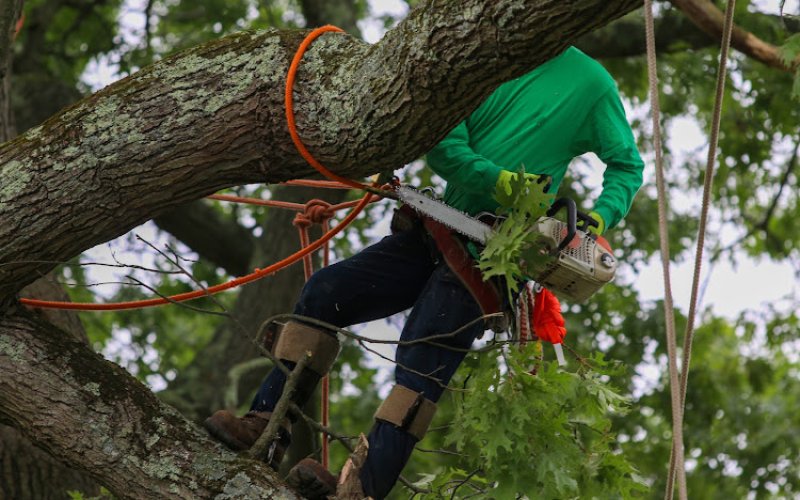
NYC Tree Trimming & Removal
Tree service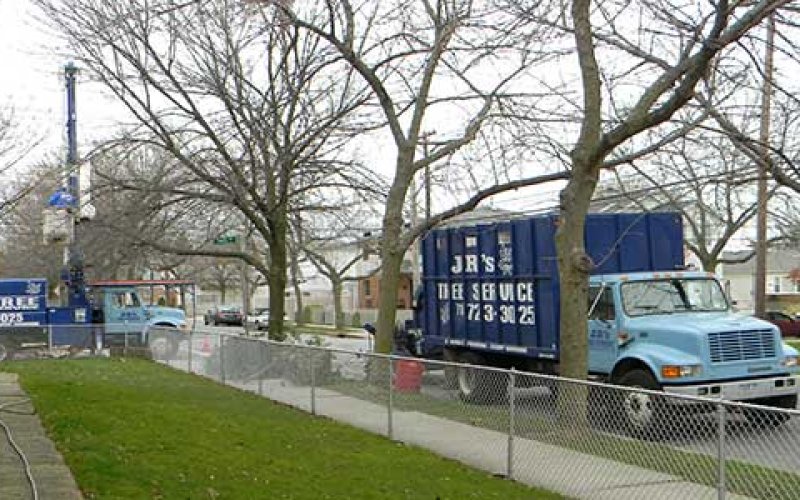
JRs Tree Service
Tree service
Arnoldo's Tree Service
Tree service
GREENLEAF TREE CARE
Tree service
TJ’s BRONX TREE SERVICE
Tree service
𝐄𝐛𝐞𝐧-𝐄𝐳𝐞𝐫 𝐓𝐫𝐞𝐞 𝐒𝐞𝐫𝐯𝐢𝐜𝐞
Tree service
AA Treecare, Inc
Tree service
Discounted Tree Cutting and Removal Company
Tree serviceA skilled team offers Discounted Tree Cutting and Removal Services designed to keep properties safe, trees healthy, and landscapes attractive. Precision trimming and pruning enhance growth and appearance, while overgrown branches, fallen limbs, and stumps are carefully managed to prevent hazards. Regular maintenance ensures long-term tree health, and lot clearing or brush removal restores order to cluttered outdoor spaces. Services are tailored to both residential and commercial properties, Combining Affordability, expertise, and attention to detail to deliver safe, well-maintained, and visually appealing landscapes.
About tree care in New York
Walk through Forest Hills or Ditmas Park after a nor'easter and you'll see it — busted limbs on Toyotas, half a silver maple leaning on somebody's porch roof, and a line of trucks with wood chippers idling at the curb by 8am. That's the rhythm of Tree Care Services here. Storm season doesn't just create demand, it basically resets the whole industry's calendar every year.
New York's tree stock skews old. A lot of the street trees and backyard giants in the outer boroughs went in decades ago during postwar planting pushes, and old trees mean more deadwood, more root heave cracking sidewalks, more calls to arborists about a limb that "wasn't like that last summer." Add in construction — every new build or gut renovation in Queens or parts of the Bronx tends to require clearing or protecting existing trees to satisfy Parks Department rules — and you've got a market with steady baseline work plus these sharp seasonal spikes whenever wind or ice knocks things sideways.
The market itself feels fragmented rather than dominated by one or two big players. You've got small two-and-three-person crews working mostly by word of mouth in a single neighborhood, mid-size outfits with bucket trucks and stump grinders covering multiple boroughs, and a handful of larger companies that handle commercial contracts and storm-emergency overflow work. Customers split pretty evenly between homeowners dealing with one problem tree, co-op and condo boards maintaining shared courtyards, and developers who need a lot cleared before groundbreaking. What separates New York from, say, a Midwest suburb is the terrain problem — narrow lots, shared property lines, overhead wires everywhere, and trees wedged between a brownstone and a chain-link fence with maybe eighteen inches of clearance. Equipment access alone changes the whole job.
Park Slope, Brooklyn
- Area Profile: Brownstone-heavy, higher-income, lots of mature street trees planted along tree-lined blocks decades ago.
- Tree Care Services Activity: Pruning and canopy thinning dominate here — people want their London planes and honey locusts healthy, not gone. Removal is a last resort and usually tied to disease or storm damage.
- Price Range: Routine pruning often runs $300–$800 per tree; larger removals with tight-access rigging can push past $2,000.
- Local Note: Many of these are city-owned street trees, so any work often needs a permit from NYC Parks — a step that trips up a lot of new homeowners.
Riverdale, Bronx
- Area Profile: Leafy, suburban-feeling pocket with larger lots, older money, and a lot of tree cover relative to the rest of the borough.
- Tree Care Services Activity: Full-tree removal and large-scale trimming are common, given how many properties have oaks and maples that have been growing untouched for 40+ years.
- Price Range: Medium removal jobs typically land in the $800–$2,500 range; large hazardous removals with crane work can go well beyond that.
- Local Note: Bigger lots mean better equipment access, which sometimes keeps prices a bit more reasonable than tighter Brooklyn blocks — crews aren't fighting a driveway that's barely truck-width.
Staten Island (South Shore)
- Area Profile: More suburban sprawl than anywhere else in the city, single-family homes with actual yards, mixed income levels.
- Tree Care Services Activity: Stump grinding and storm cleanup see heavy demand — this area tends to catch wind damage hard given its more open exposure near the water.
- Price Range: Stump grinding averages roughly $150–$500 depending on diameter; storm cleanup jobs vary wildly based on scope.
- Local Note: Homeowners here are more likely to own the tree outright (versus city-owned street trees), which simplifies permitting but puts the removal cost fully on them.
Forest Hills, Queens
- Area Profile: Mix of Tudor-style homes and co-op buildings, established middle-to-upper income residents, strong tree canopy in the Gardens section specifically.
- Tree Care Services Activity: A steady mix of pruning, removal, and emergency work — this is a neighborhood where people call an arborist for a consult before doing anything drastic.
- Price Range: Consultations sometimes run $75–$150 (often credited toward the job); actual work ranges broadly, $400–$1,800 for typical jobs.
- Local Note: The Forest Hills Gardens Corporation has its own rules about tree removal on certain properties — HOA-style approval can add a delay most people don't expect.
📊 Current Price Points:
- Budget options: $150–$450 (small tree/limb trimming, basic pruning)
- Mid-range: $500–$1,800 (medium tree removal, most popular segment)
- Premium: $2,000+ (large/hazardous tree removal requiring a crane, extensive stump grinding, or multi-tree lot clearing)
📈 Market Trends:
- Demand is seasonal but trending upward overall — more frequent severe storms in recent years mean emergency work keeps eating into crews' regular scheduling capacity.
- Crew and equipment availability tightens noticeably right after any major storm event — bucket trucks and experienced climbers get booked out fast.
- Pricing has been drifting upward gradually, driven by insurance costs, fuel, and general labor scarcity for skilled climbers.
- Dormant-season work (late fall through winter) tends to be both cheaper and better for tree health — less foliage means faster jobs and lower risk.
- Emergency work often gets same-day-to-72-hour response depending on severity; routine pruning or removal frequently books out several weeks in busy months.
💰 What People Are Spending:
- Tree removal (medium-sized): $600–$2,200
- Pruning/trimming: $200–$800
- Stump grinding: $150–$500
- Emergency storm cleanup: $300–$3,000+ depending on scope and access difficulty
New York's population stays dense and mostly stable, with pockets of new residential growth in outer-borough areas that used to be lower-priority for developers — think parts of the Bronx and Eastern Queens seeing new construction that wasn't happening a decade ago. That kind of growth almost always comes with lot-clearing work first.
Economic Indicators:
- Housing stays tight citywide, which keeps renovation and new-build activity fairly constant — good for Tree Care Services tied to construction prep.
- Income levels vary hugely by borough and even block-to-block, which shapes whether people opt for full-service arborist consults or bare-bones removal.
- Development pressure in outer boroughs is steady, translating to recurring lot-clearing and tree-protection work near job sites.
Local Market Dynamics: Demand here is driven less by any single cause and more by a layered mix — old tree stock reaching end-of-life, increasingly unpredictable storm patterns, and the occasional pest outbreak (spotted lanternfly concerns have made a lot of homeowners nervous about tree health in general, even when it's not the direct cause of decline). The competition landscape stays fragmented — no single company dominates citywide, and most business still runs on local reputation and referrals rather than big advertising budgets.
How This Affects Buyers/Customers: Practically, this means pricing varies more by neighborhood access and urgency than by some fixed citywide rate card. A removal on a wide Riverdale lot with truck access will run cheaper than the same-sized tree wedged into a Cobble Hill backyard reachable only through a narrow gate.
New York Seasonal Patterns:
- ☀️ Spring/Summer: High demand, storm season kicks in (especially June–September), full-canopy work makes visual assessment easier but pricing tends to run higher.
- 🍂 Fall: Strong window for proactive removal before winter ice loads test weak limbs — often a sweet spot for scheduling non-emergency work.
- ❄️ Winter: Slower season overall, but dormant-season pruning is often cheaper and actually healthier for the tree — less stress, cleaner cuts, easier to see branch structure without leaves.
- 📅 Peak months: Book early for summer storm-adjacent work; negotiate more freely in January–March when crews have gaps.
Timing Tips for New York: The best general window for non-emergency work is late fall into winter — arborists have more schedule flexibility and pricing softens slightly. Emergency-call demand spikes hard and fast right after any major storm, sometimes within hours. Routine work is worth scheduling 3–6 weeks ahead during peak season; in winter, a week or two notice is often plenty.
Smart Timing Tips:
- ✓ Schedule pruning in late winter before spring growth kicks in — trees heal faster and cost is often lower
- ✓ Get on a company's list before hurricane season if you already know you've got a risky tree
- ✓ Avoid same-day emergency premiums by addressing obviously dying or leaning trees proactively
- ✓ Ask about off-season discounts — some crews will negotiate in slower winter months
Credentials to Verify: Look for an ISA Certified Arborist on staff — that credential actually means something, unlike a lot of vague "tree expert" claims. Confirm they carry general liability insurance and workers' compensation, and that they hold a valid NYC business license. Membership in TCIA (Tree Care Industry Association) is a solid signal of legitimacy, though plenty of good small operators aren't members. Check their standing with the Better Business Bureau and read reviews specifically for patterns — one bad review is normal, five complaints about no-shows is not.
Questions to Ask:
- How long have you worked in New York specifically (not just "the tri-state area")?
- Can you provide references from a job in my neighborhood?
- Do you carry both liability insurance and workers' comp for climbers on the crew?
⚠️ Red Flags Specific to New York Tree Care Services:
- No proof of liability insurance or workers' comp — if a worker gets hurt on your property without it, you can be held liable
- Door-knockers after a storm pushing immediate removal of a tree that doesn't actually need it
- Demanding full payment upfront before any work starts
- Offering to "top" a tree (cutting it flat) — a harmful practice reputable arborists avoid
Where to Check Complaints: BBB profiles, Google and Yelp review patterns (watch for a cluster of one-star reviews mentioning no-shows or damage), and general consumer complaint boards. Repeated complaints about property damage or vanishing deposits are the ones to take seriously.
✓ Established presence in New York (not just passing through)
✓ Verifiable local reviews and references
✓ Transparent pricing, no hidden fees
✓ Clear process explained upfront
✓ Responsive communication
Check Reviews & Ratings
We recommend verifying businesses through trusted review platforms before making a decision.
Frequently Asked Questions
Popular Categories in New York
Explore Other Cities
🌳 Tree Care Pros near New York
Professional Categories in New York, NY
Related Services from Similar Professionals