Chesapeake, VA's Trusted Tree Care Services
Welcome to your go-to spot for finding tree care pros in Chesapeake, VA! Whether you've got a storm-damaged oak or just need some routine trimming, we've got local folks ready to help.
Map of Businesses in Chesapeake
All Listings in Chesapeake
11 businesses
757 Tree Solutions
Tree service
Affordable Tree Service & Firewood
Tree service
Colonial Tree Care
Tree service
Dave’s Cove Complete Tree Care
Tree service
Integrity Tree Specialist
Tree service
Tree Top Disciple Tree Service LLC
Tree service
A Atlantic Tree Service
Tree service
Brandon's Tree Service
Tree service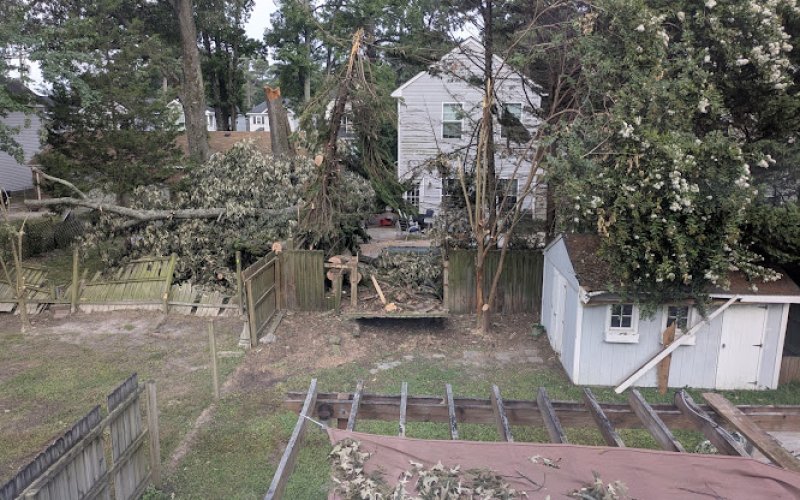
M & R Tree Service
Tree service
Tree Works, LLC
Tree service
Chesapeake Bay Tree, Inc.
Tree serviceAbout tree care in Chesapeake
Here's the thing about Chesapeake: half the city is basically a forest with houses dropped into it, and the other half is low, flat, and one bad nor'easter away from a canopy full of widowmakers. That combination is why Tree Care Services stays busy here in a way it just doesn't in a place like, say, downtown Norfolk. You've got mature oaks and loblolly pines that have been growing since before the subdivisions went in, sitting on soil that gets saturated fast when a hurricane remnant rolls through off the Atlantic. Add wind, add clay-heavy ground that doesn't hold roots the way sandier soil does, and you get trees that look fine in July and end up on somebody's roof in September.
The market itself feels pretty fragmented — a handful of established, multi-crew operations that've been around long enough to have a real yard and a bucket truck fleet, and then a rotating cast of smaller two-or-three-man outfits, some legit, some less so. Demand comes from a few different directions at once: homeowners in older neighborhoods dealing with a leaning pine or a diseased oak, new construction crews clearing lots out toward the Hickory or Grassfield areas, and HOAs that need common-area trees kept in line so nobody's sightline (or roof) becomes a liability. Pest and disease pressure adds a steady background hum too — southern pine beetle shows up in cycles, and older pines especially take the hit.
What separates Chesapeake from, say, Virginia Beach or Suffolk isn't hugely dramatic, but it's real. You've got more rural-adjacent land here — Deep Creek, Great Bridge's outskirts, the areas bumping up against the Dismal Swamp — where lot sizes are bigger and tree removal jobs get genuinely large-scale. And the storm risk here tracks the whole Hampton Roads region: tropical systems, remnant hurricanes, the occasional derecho-style summer blow-through. That storm rhythm basically sets the calendar for the whole industry locally.
Great Bridge
- Area Profile: Established, middle-to-upper income, a mix of older brick ranches and newer builds near the historic district. Lots of pride-of-ownership homes with mature landscaping.
- Tree Care Services Activity: Routine pruning and canopy shaping dominate here — people care about how the yard looks, not just whether the tree is a hazard. Stump grinding after removal is common since folks don't want an eyesore in a manicured yard.
- Price Range: Mid-range to slightly above, generally $500–$2,500 depending on tree size and access.
- Local Note: Older tree canopy means bigger, more established trees — jobs here tend to skew larger and more technical than in newer subdivisions.
Western Branch
- Area Profile: Well-off, established family neighborhoods, larger lots, a fair number of waterfront or near-waterfront properties along the Western Branch of the Elizabeth River.
- Tree Care Services Activity: Big-tree removal and storm cleanup are the headline services. Waterfront lots often have older, taller hardwoods that need real bucket-truck or climbing expertise.
- Price Range: Runs higher — $1,000–$4,000+ isn't unusual for a large hazardous removal near a structure or water.
- Local Note: Tight, winding streets and wooded lots can limit equipment access, which pushes prices up when a crew has to hand-carry brush instead of chipping on-site.
Hickory / Grassfield
- Area Profile: Newer growth corridor, younger families, a lot of recent-build subdivisions carved out of former farmland and wooded acreage.
- Tree Care Services Activity: Lot-clearing for new construction and builder-driven tree removal is a bigger share of the work here than in older parts of the city. Once homes are built, demand shifts toward young-tree pruning and storm damage response.
- Price Range: Clearing jobs vary wildly by acreage, but individual residential tree work tends to run $300–$1,800.
- Local Note: Newer HOAs here often have specific rules about which trees homeowners can remove without approval — worth checking before you call anyone.
Deep Creek
- Area Profile: Older, more working-class and rural-feeling, closer to the Dismal Swamp Canal, larger and less manicured lots.
- Tree Care Services Activity: Storm cleanup and hazardous removal are the bread and butter — less cosmetic pruning, more "this tree is about to fall on my shed" type calls.
- Price Range: Generally more budget-conscious, $250–$1,500 for typical jobs.
- Local Note: Proximity to wetlands means wetter soil and shallower root systems in some spots — a factor that actually raises fall risk after heavy rain, even for otherwise healthy-looking trees.
South Norfolk / Money Point Area
- Area Profile: More urban, older housing stock, tighter lots, mixed income.
- Tree Care Services Activity: Smaller-scale trimming and removal jobs dominate, often driven by trees that have grown too close to power lines or foundations over decades.
- Price Range: Tends toward the lower-to-mid end, $200–$1,200 for most jobs.
- Local Note: Tight lot spacing between houses means crane access is often impossible — expect more climbing-based removal, which can add labor cost even on a modest tree.
📊 Current Price Points:
- Budget options: $150–$450 (small tree/limb trimming, basic pruning)
- Mid-range: $500–$2,000 (medium tree removal, the most commonly booked job type)
- Premium: $2,500+ (large or hazardous removal needing a crane, extensive stump grinding, multi-tree jobs)
📈 Market Trends:
- Demand stays seasonal but with a rising baseline — more building activity in growth corridors means more clearing and follow-up trim work year-round.
- Crew availability tightens noticeably after any significant storm system passes through Hampton Roads; expect a backlog rather than same-day service in those windows.
- Pricing has been drifting upward gradually, tracking fuel, insurance, and labor costs rather than any dramatic spike.
- Dormant-season (roughly late fall through winter) pruning demand is steadier and often comes with softer pricing, since crews aren't slammed with storm cleanup.
- Emergency work post-storm often gets same-day-to-a-few-days response for genuinely hazardous situations; routine, non-urgent work can mean a multi-week wait during peak season.
💰 What People Are Spending:
- Tree removal (medium-sized): $500–$2,000 typical spend
- Trimming/pruning: $200–$800 depending on tree count and size
- Stump grinding: $150–$500 per stump, more for large old-growth stumps
- Emergency storm cleanup: $300–$3,000+, highly variable based on damage extent and access
Economic Indicators: Chesapeake's population has been growing steadily for years, with new residential development pushing into the southern and western parts of the city. It's a diversified local economy — logistics, retail, military-adjacent employment given the broader Hampton Roads base presence, plus a good chunk of homeowners who skew middle-to-upper-middle income compared to some neighboring cities. New subdivisions keep popping up on formerly wooded or agricultural land, which means lot-clearing work isn't going anywhere anytime soon.
Local Market Dynamics: The core driver here is simple — an aging tree canopy in established neighborhoods combined with a storm-prone coastal climate. Pines especially don't age gracefully; a 40-to-60-year-old loblolly is exactly the kind of tree that gets a homeowner's insurance company nervous. Competition among providers is fragmented rather than dominated by one or two names — plenty of small crews compete for the same calls, which keeps pricing somewhat competitive but also means quality varies a lot from one outfit to the next.
How This Affects Buyers/Customers: Practically, this means shopping around actually matters here — get two or three quotes, especially for anything over a thousand dollars. It also means timing your call around storm season (or avoiding it) can meaningfully change both price and wait time.
Chesapeake Seasonal Patterns:
- ☀️ Spring/Summer: High demand, full canopy makes hazard assessment easier but also coincides with hurricane season ramping up by late summer — book early if you want a non-emergency slot.
- 🍂 Fall: Good window for pre-winter hazard removal; demand cools slightly after peak storm months, sometimes opening up better scheduling and pricing.
- ❄️ Winter: Often the best time for pruning — trees are dormant, easier to see structure without leaves, and crews are generally less swamped unless there's an ice event.
- 📅 Peak months: Late summer through early fall (hurricane season) — book ahead or expect a wait. Winter tends to be more negotiable.
Timing Tips for Chesapeake: The sweet spot for routine, non-emergency work is winter into early spring — trees are dormant, crews have more open calendar space, and you're not competing with a hundred other storm-damaged homeowners. Emergency demand spikes hard and fast right after any major wind event, so if a tree's already showing stress (leaning, cracked limbs, fungus at the base), don't wait for the storm to make the decision for you.
Smart Timing Tips:
- ✓ Schedule routine pruning in the dormant season for better pricing and healthier cuts
- ✓ Get a hazard tree assessed before hurricane season ramps up, not after
- ✓ Book 2-4 weeks ahead for non-emergency work during peak summer/fall demand
- ✓ Be wary of pricing during the immediate post-storm rush — it's the worst time to negotiate
Credentials to Verify: Look for an ISA Certified Arborist on staff — that credential actually means something and isn't just a marketing term. Confirm they hold a valid Virginia business license and, critically, both general liability insurance and workers' compensation coverage. Membership in TCIA (Tree Care Industry Association) is a solid signal of legitimacy, though plenty of good small operators aren't members and that alone shouldn't disqualify them.
Questions to Ask: How long have they actually worked in Chesapeake specifically (not just "the area" broadly)? Can they give references from recent local jobs? Do they carry both liability insurance and workers' comp for anyone climbing on your property?
⚠️ Red Flags Specific to Chesapeake Tree Care Services:
- No proof of liability insurance or workers' comp — if a worker gets hurt on your property without it, you can be held liable
- Door-knockers right after a storm pushing immediate removal of a tree that doesn't actually need it
- Demanding full payment upfront before any work starts
- Offering to "top" a tree (cutting it flat) — a harmful practice reputable arborists avoid
Where to Check Complaints: The Virginia Department of Professional and Occupational Regulation handles contractor licensing complaints if a bigger dispute arises. The Better Business Bureau is worth a quick look too. On Google and Yelp, pay less attention to the star average and more to whether recent reviews mention insurance issues, no-shows, or pressure tactics — that pattern matters more than one bad review.
✓ Established presence in Chesapeake (not just passing through)
✓ Verifiable local reviews and references
✓ Transparent pricing, no hidden fees
✓ Clear process explained upfront
✓ Responsive communication
Check Reviews & Ratings
We recommend verifying businesses through trusted review platforms before making a decision.
Frequently Asked Questions
Popular Categories in Chesapeake
Explore Other Cities
🌳 Tree Care Pros near Chesapeake
Professional Categories in Chesapeake, VA
Related Services from Similar Professionals