Top Tree Care Services Serving Belmont, CA
Welcome to your go-to spot for finding tree care pros in Belmont, CA! Whether you need a quick trim or a full removal, we've got local folks who can help.
Map of Businesses in Belmont
All Listings in Belmont
10 businesses
Beyond Tree Care Inc.
Tree service
Brush Hog Tree Care Inc.
Tree service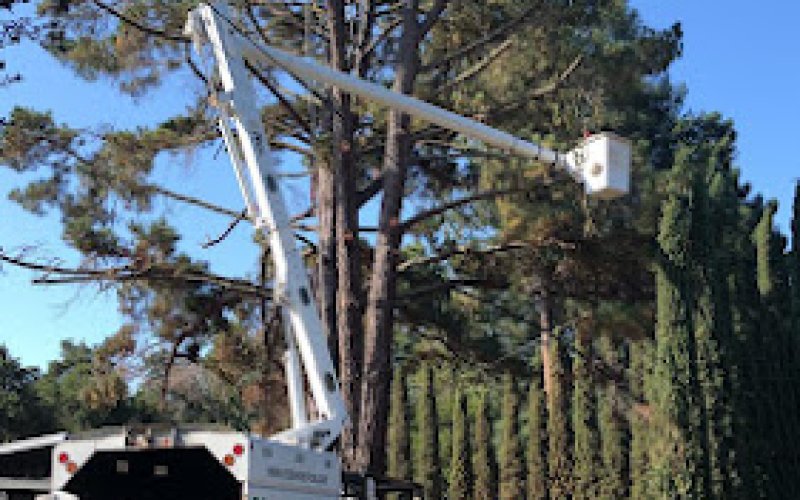
EC Tree Service Inc
Tree service
Maguire Tree Care, Inc.
Tree service
Majestic Tree
Tree service
Peninsula Tree Care
Tree service
Rodriguez Tree Service
Tree service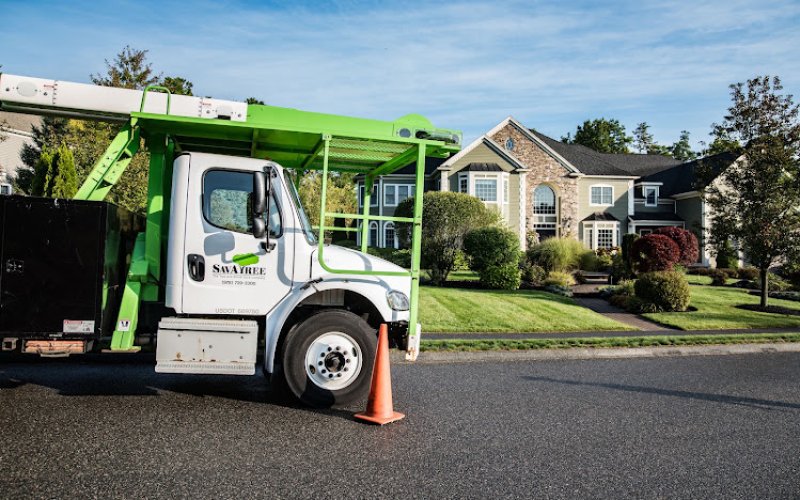
SavATree - Tree Service
Tree service
JC Tree Care & Landscape
Tree service
Monster Tree Service of the Coast
Tree serviceAbout tree care in Belmont
Drive up Ralston Avenue in January after a good soaker and you'll probably see at least one crew out there with a chipper running, cleaning up a eucalyptus limb that gave out overnight. That's Belmont in a nutshell — this is a hillside town with a lot of old growth, and old growth plus wind plus clay soil that gets saturated in winter equals a steady stream of work for Tree Care Services companies, year-round, with spikes you can basically set a calendar by. The market here isn't huge, but it's not sleepy either. You've got a mix of small owner-operator outfits — guy with a chipper truck, a climber, maybe his brother-in-law on ground duty — up through a few larger, more established companies with bucket trucks and full arborist staff who handle the bigger jobs on the hillier lots. Demand comes from a few directions at once: homeowners dealing with a leaning oak or a eucalyptus that's dropping limbs onto the driveway, developers clearing lots for the infill construction that's been steadily filling in gaps around town, and HOAs in the newer planned communities that need someone on contract to keep common-area trees from becoming liabilities. What makes Belmont a little different from, say, a flatter Peninsula city is the terrain and the tree mix. You've got steep lots around the Belmont hills where equipment access is genuinely difficult, mature Monterey pines and coast live oaks that have been in the ground for decades and are now reaching the size where storm risk becomes real, and a fair number of eucalyptus trees — gorgeous, but notorious for dropping heavy limbs with zero warning. Add in the occasional wet winter with real wind events, and you get a market where "emergency call" isn't a rare category. It's a regular Tuesday for a lot of these companies.
Belmont Heights / Hallmark
- Area Profile: Upper-income hillside neighborhood, larger lots, a lot of long-time homeowners alongside newer buyers who bought in for the views.
- Tree Care Services Activity: Heavy on canopy thinning and crown reduction for view preservation, plus routine health pruning on mature pines and oaks. Removal jobs tend to be bigger-ticket because the trees are bigger.
- Price Range: Often $800–$3,500+ depending on tree size and whether a crane or specialized rigging is needed for the slope.
- Local Note: Steep, narrow driveways mean a lot of jobs require hand-carrying brush out or using smaller equipment — this adds labor time and shows up in the estimate.
Belmont Terrace
- Area Profile: Established, middle-to-upper-middle income, mid-century homes with mature street trees and backyard fruit trees planted decades ago.
- Tree Care Services Activity: A lot of routine trimming and deadwooding, plus stump grinding after homeowners finally decide to take out that declining fruit tree or oak that's been half-dead for years.
- Price Range: Typically $300–$1,200 for trimming/pruning jobs; stump grinding often runs $150–$500 depending on diameter.
- Local Note: Older sidewalks and driveways here have been pushed up by root systems for years — homeowners sometimes bundle root pruning or partial removal with sidewalk repair timing.
Sterling Downs / Lyall Estates area
- Area Profile: Family-oriented, solidly upper-middle income, quieter residential streets with a good amount of shade cover.
- Tree Care Services Activity: Preventative pruning is common here — people schedule it before storm season rather than waiting for damage. Also a fair amount of hedge and ornamental tree shaping.
- Price Range: $250–$900 for maintenance-type work; full removals climb from there depending on species and access.
- Local Note: Some HOA-adjacent streets have tree preservation expectations, so it's common for homeowners to double check before removing anything visible from the street.
Central Belmont / near El Camino corridor
- Area Profile: Denser mix of older homes, some multi-family, more turnover of owners and renters.
- Tree Care Services Activity: Smaller-scale jobs dominate — limb removal, storm cleanup, stump grinding on smaller street trees. Less big-canopy work than the hill neighborhoods.
- Price Range: Generally on the lower end, $150–$700 for most routine jobs.
- Local Note: Tight lots and shared property lines mean disputes over whose tree is whose come up more here — companies doing work in this area get used to navigating that conversation.
Newer construction pockets (infill development areas)
- Area Profile: Newer builds or major remodels on previously undeveloped or redeveloped lots.
- Tree Care Services Activity: Lot clearing ahead of construction, protective fencing/pruning to preserve trees during builds (sometimes required by permit conditions), and post-construction cleanup.
- Price Range: Highly variable — clearing jobs can run well into the thousands depending on number and size of trees.
- Local Note: The City of Belmont has tree protection rules that can apply during construction, so permits and arborist reports sometimes become part of the job, not just the cutting itself.
📊 Current Price Points:
- Budget options: $150–$400 (small tree/limb trimming, basic pruning, minor deadwooding)
- Mid-range: $500–$1,800 (medium tree removal, most popular segment for single-family homes)
- Premium: $2,000+ (large or hazardous tree removal requiring crane work, extensive stump grinding, multi-tree lot clearing)
📈 Market Trends:
- Demand tends to run steady through the year with sharp seasonal bumps — it's rarely dead quiet, but it's also not uniformly busy.
- Crew availability tightens noticeably right after a windstorm; the good companies book out fast when that happens.
- Pricing has generally trended upward gradually, in line with labor and insurance costs rising across the trades — nothing dramatic year to year, just a slow creep.
- Dormant-season (late fall through winter) pruning is often pushed by arborists as both cheaper and better for tree health, since trees aren't actively pushing sap.
- Emergency work usually gets same-day or next-day response from established companies; routine trimming or removal can mean a wait of anywhere from a few days to a few weeks depending on the season.
💰 What People Are Spending:
- Tree trimming/pruning — most common job type, typically $200–$900
- Full tree removal (medium size) — $600–$2,000
- Stump grinding — $150–$600 depending on diameter and root spread
- Emergency storm cleanup — $300–$2,500+, highly dependent on damage severity and access
Belmont's population has held fairly steady for years, with modest growth coming mostly from redevelopment and infill rather than sprawling new subdivisions — there just isn't much raw land left to build on in a hillside town like this. The local economy leans white-collar, tied heavily to the broader Peninsula tech and professional-services job base, and household incomes here skew above the regional average in a lot of pockets, which matters for a service industry like tree care where jobs aren't cheap and people generally have the means to hire out rather than DIY. Local Market Dynamics: The core driver is simple: a lot of Belmont's tree canopy is old. Trees planted in the mid-20th century as the town built out are now mature, sometimes past their healthy prime, and more prone to limb failure or root issues in wet years. Combine that with real winter storm exposure and you get consistent baseline demand plus periodic surges. The competitive field is fragmented — plenty of small operators — but a handful of longer-established companies tend to dominate the bigger, more technical jobs, especially anything involving crane work or certified arborist assessments. How This Affects Buyers/Customers: Practically, this means homeowners in the hill neighborhoods should expect to pay more and wait a bit longer for specialized jobs, while flatter, denser areas see faster turnaround on smaller work. And if a storm rolls through, don't expect same-week service unless it's a genuine emergency — everyone else had the same idea you did.
- ☀️ Spring/Summer: Steady demand, full-canopy work like shaping and thinning is popular, but this is also peak season so scheduling can stretch out.
- 🍂 Fall: A smart window — people start thinking ahead to winter storms and want hazard limbs removed before the rain starts. Some companies offer slower-season pricing here.
- ❄️ Winter: Storm-driven surges for emergency work, but it's also the best time for dormant-season pruning — often cheaper and healthier for the tree.
- 📅 Peak months: Late fall through early winter for hazard prep; right after major storms for emergency response. Late summer can be a quieter window for booking routine work.
Non-emergency trimming and removal is generally easiest to schedule (and sometimes cheaper) in late summer or early fall, before the pre-storm rush hits. Emergency demand predictably spikes in the 24–72 hours after a significant wind or rain event — if you can see a problem coming (a leaning tree, a crack in a limb) don't wait for the storm to make the decision for you. Smart Timing Tips:
- ✓ Book routine pruning in late summer/early fall, before the seasonal rush
- ✓ Get hazard trees assessed before the first big winter storm, not after
- ✓ Ask about dormant-season pricing — it's often better for both your wallet and the tree
- ✓ For non-urgent jobs, plan on scheduling a few weeks out during peak season
Look for an ISA Certified Arborist on staff — that's the credential that actually means something in this trade. In California, tree service companies doing structural work should carry a C-27 (Landscaping) contractor license through the Contractors State License Board (CSLB), and you can verify that license status directly on the CSLB website. Beyond that, check for general liability insurance and workers' compensation coverage, and see if they're affiliated with the Tree Care Industry Association (TCIA), which is a good signal of professional standards. Questions to Ask:
- How long have you worked in Belmont specifically?
- Can you provide references from recent local jobs?
- Do you carry liability insurance AND workers' comp for climbers on the crew?
⚠️ Red Flags Specific to Belmont Tree Care Services:
- No proof of liability insurance or workers' comp — if a worker gets hurt on your property without it, you could be on the hook
- Door-knockers right after a storm pushing immediate removal of a tree that doesn't actually look hazardous
- Demanding full payment upfront before any work starts
- Offering to "top" a tree (flat-cutting the crown) — a damaging shortcut that real arborists avoid
Start with the CSLB website for license status and any disciplinary history, then cross-reference with the BBB and Google/Yelp reviews. On reviews, watch less for the star average and more for the pattern — repeated mentions of no-shows, surprise charges, or sloppy cleanup are worth more than a single bad review.
✓ Established presence in Belmont (not just passing through)
✓ Verifiable local reviews and references
✓ Transparent pricing, no hidden fees
✓ Clear process explained upfront
✓ Responsive communication
No verifiable insurance or license
Cash-only, upfront-payment-in-full demands
Pushy, high-pressure tactics after a storm
Recommending tree topping as a solution
Check Reviews & Ratings
We recommend verifying businesses through trusted review platforms before making a decision.
Frequently Asked Questions
Popular Categories in Belmont
Explore Other Cities
🌳 Tree Care Pros near Belmont
Professional Categories in Belmont, CA
Related Services from Similar Professionals